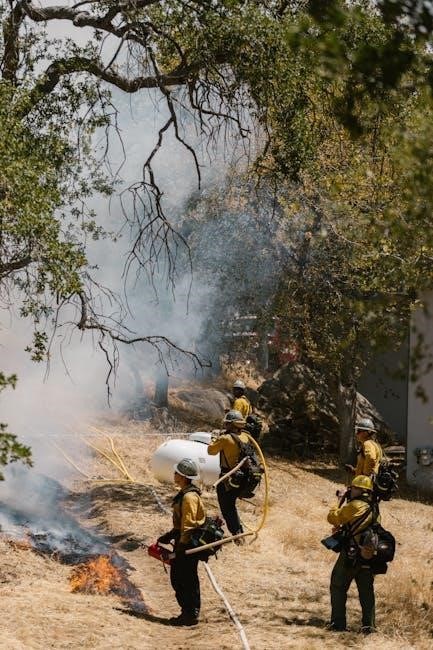
NFPA 1041 outlines professional qualifications for fire service instructors, ensuring they meet necessary standards to train effectively and safely.
1.1 Overview of the National Fire Protection Association (NFPA)
The National Fire Protection Association (NFPA) is a nonprofit organization founded in 1896, dedicated to reducing fire hazards and promoting safety worldwide. It develops consensus-based codes and standards, such as NFPA 1041, to ensure public safety and protection. NFPA standards address various fire-related risks and provide guidelines for training, equipment, and emergency response. The organization serves fire services, businesses, and governments globally.
1.2 Purpose and Scope of NFPA 1041
NFPA 1041 establishes minimum job performance requirements (JPRs) for fire service instructors, ensuring they possess the necessary knowledge and skills to train effectively. The standard addresses various levels of instructor qualifications, from Fire Service Instructor I to III, and includes updates reflecting evolving fire service needs. Its scope ensures instructors are well-prepared to teach modern fire service techniques safely and efficiently.
1.3 Importance of NFPA 1041 in Fire Service Training
NFPA 1041 is crucial for ensuring fire service instructors meet standardized qualifications, delivering effective and safe training. It establishes clear JPRs, ensuring instructors are equipped to teach modern techniques and safety protocols. This standard enhances training consistency, supports firefighter safety, and integrates initiatives like the 16 Firefighter Life Safety Initiatives, making it indispensable for modern fire service training programs.

Key Provisions of NFPA 1041
NFPA 1041 outlines professional qualifications, JPRs, and updates for fire service instructors, ensuring standardized training and safety protocols are consistently met across fire service programs.
2.1 Minimum Job Performance Requirements (JPRs) for Fire Service Instructors
NFPA 1041 establishes minimum JPRs for fire service instructors, ensuring they can effectively plan, deliver, and assess training programs. These requirements cover instructional skills, safety protocols, and the ability to adapt training methods for diverse learners. Compliance with JPRs ensures instructors meet standardized competency levels, providing high-quality training that prepares firefighters for real-world challenges while maintaining safety and adherence to professional standards.
2.2 Professional Qualifications for Fire Service Instructors
NFPA 1041 outlines professional qualifications for fire service instructors, ensuring they possess the necessary education, experience, and instructional skills to train effectively. These qualifications are updated in the 2019 edition to reflect evolving roles and include requirements for knowledge of Firefighter Life Safety Initiatives, enhancing instructors’ ability to prepare firefighters for modern challenges.
2.3 Updates in the 2019 Edition of NFPA 1041
The 2019 edition of NFPA 1041 introduces updates to reflect the evolving roles of fire service instructors. It incorporates the 16 Firefighter Life Safety Initiatives, enhancing training practices. New annexes provide guidance on integrating these initiatives, ensuring instructors are equipped to address modern challenges and improve firefighter safety. These updates emphasize the importance of staying current with industry advancements and safety protocols.

Structure of NFPA 1041
NFPA 1041 is structured into chapters covering Fire Service Instructor I and II qualifications, supported by annexes offering additional resources and clarifications for instructors.
3.1 Chapter 4: Fire Service Instructor I
Chapter 4 of NFPA 1041 outlines the minimum job performance requirements (JPRs) for Fire Service Instructor I, focusing on teaching methods, safety protocols, and lesson planning. It ensures instructors possess the necessary skills to deliver training effectively, emphasizing practical application and adherence to safety standards. This chapter serves as the foundation for instructor qualifications, providing clear guidelines for competency in training firefighters.
3.2 Chapter 5: Fire Service Instructor II
Chapter 5 of NFPA 1041 addresses the advanced qualifications for Fire Service Instructor II, building on the foundational skills from Chapter 4. It emphasizes complex training scenarios, leadership development, and the ability to adapt instructional methods for diverse learners. This chapter ensures instructors can handle advanced training needs, preparing firefighters for real-world challenges with enhanced instructional strategies and expertise.
3.3 Annexes and Supporting Documents
The annexes and supporting documents in NFPA 1041 provide supplementary guidance, including examples, templates, and detailed explanations. These resources enhance understanding of the standard’s requirements, offering practical tools for instructors. Updates, such as the integration of the 16 Firefighter Life Safety Initiatives, are also highlighted, ensuring comprehensive support for fire service training and professional development.

Job Performance Requirements (JPRs)
JPRs define the essential tasks and competencies for fire instructors, structured by qualification levels, ensuring they meet current training demands and safety standards effectively.
4.1 JPRs for Fire Service Instructor I
JPRs for Fire Service Instructor I focus on foundational teaching skills, including presenting information, demonstrating procedures, and evaluating student performance. These requirements ensure instructors can effectively deliver training while maintaining safety standards. The 2019 edition integrated the 16 Firefighter Life Safety Initiatives, enhancing instructors’ ability to teach modern safety practices and operational strategies.
4.2 JPRs for Fire Service Instructor II
Fire Service Instructor II JPRs build on Instructor I by adding advanced teaching methods, course development, and evaluation techniques. Instructors must design comprehensive training programs, incorporate scenario-based training, and assess program effectiveness. These JPRs emphasize the ability to adapt instruction to diverse learner needs and ensure compliance with NFPA standards, reflecting the evolving demands of fire service training.
4.3 JPRs for Fire Service Instructor III
Fire Service Instructor III JPRs focus on advanced leadership and mentorship roles. Instructors must demonstrate expertise in developing and evaluating complex training programs, mentoring other instructors, and integrating emerging technologies. They are responsible for strategic planning, ensuring compliance with NFPA standards, and fostering a culture of safety and continuous improvement within fire service training organizations.

Consolidation into NFPA 1020
NFPA 1041 has been consolidated into NFPA 1020, streamlining fire service instructor qualifications and aligning with broader emergency response standards for enhanced clarity and compliance.
5.1 Background of the Consolidation Plan
The consolidation plan aimed to merge NFPA 1041 into NFPA 1020, simplifying standards for fire service instructors. This initiative was part of the Emergency Response and Responder Safety Document Consolidation Plan, approved by the NFPA Standards Council, to reduce redundancy and enhance consistency across fire service training and operations, ensuring a more cohesive approach to professional qualifications and instructor training.
5.2 Impact on Fire Service Instructor Qualifications
The consolidation of NFPA 1041 into NFPA 1020 streamlined instructor qualifications, reducing redundancy and aligning training standards. This merge ensured a single, unified set of criteria for fire service instructors, enhancing clarity and consistency; It also facilitated the integration of updated practices, ensuring instructors meet modern training demands while maintaining the high standards expected for fire service education and operations.
5.3 Transitioning to the New Standard
Transitioning to NFPA 1020 involves adopting updated requirements for fire service instructors, ensuring alignment with modern training practices. The consolidation simplifies compliance by integrating qualifications into one standard, reducing duplication. Instructors must familiarize themselves with the new structure and updated JPRs. Training programs and materials should be revised to reflect these changes, ensuring seamless adaptation and continued excellence in fire service education.

Firefighter Life Safety Initiatives
The 16 Firefighter Life Safety Initiatives prioritize firefighter safety and survival, integrated into NFPA 1041 to enhance instructor training and emergency response practices.
6.1 Overview of the 16 Initiatives
The 16 Firefighter Life Safety Initiatives aim to reduce firefighter fatalities and injuries, focusing on safety culture, training, and incident command. They emphasize situational awareness, risk assessment, and personal accountability, ensuring instructors integrate these principles into their teaching, aligning with NFPA 1041 standards to create a safer fire service environment.
6.2 Integration into NFPA 1041
The 16 Firefighter Life Safety Initiatives are integrated into NFPA 1041 through Annex C, which provides guidance on implementing these initiatives. This integration ensures instructors address critical safety topics, fostering a culture of safety and accountability. The annex offers practical strategies to incorporate these initiatives into training programs, aligning with NFPA 1041’s goal of enhancing firefighter safety and operational effectiveness.
6.3 Enhancing Instructor Training with These Initiatives
The 16 Firefighter Life Safety Initiatives are incorporated into NFPA 1041 to enhance instructor training by providing practical strategies for teaching critical safety concepts. Annex C offers detailed guidance, enabling instructors to improve firefighters’ knowledge and decision-making skills. These initiatives emphasize real-world application, ensuring instructors can effectively prepare firefighters for hazardous situations, ultimately reducing risks and improving operational safety.
Accessing the NFPA 1041 Standard
The NFPA 1041 standard is available as a PDF through subscriptions or purchases, with online access offered via the NFPA website for convenience.
7.1 Availability of the NFPA 1041 PDF
The NFPA 1041 PDF is readily available for purchase or subscription through the National Fire Protection Association website. The 2019 edition provides essential updates, including new annexes and revised job performance requirements. Users can access the document in digital format, ensuring easy reference and portability. The PDF version is ideal for fire service instructors seeking to stay compliant with the latest training standards and professional qualifications.
7.2 Subscription and Purchase Options
The NFPA 1041 standard is available for purchase as a PDF or in print from the National Fire Protection Association website. Users can opt for a one-time purchase or subscribe to NFPA’s digital platform for ongoing access to updated standards. Subscription options include annual access to the latest editions, while individual purchases provide a one-time download. Pricing varies based on format and subscription duration, with discounts available for bulk orders.
7.3 Online Access to NFPA Standards
The NFPA 1041 standard is accessible online through the National Fire Protection Association website. Users can purchase and download the PDF directly or access it through NFPA’s digital platform. Online access provides convenient navigation, search functionality, and regular updates. The platform is mobile-friendly, allowing users to review standards on-the-go. This digital access ensures fire service instructors stay informed and compliant with the latest requirements.

Updates and Revisions
The 2025 edition of NFPA 1041 includes updates to reflect modern fire service training practices, emphasizing enhanced safety protocols and instructor qualification standards.
8.1 Recent Changes in the 2025 Edition
The 2025 edition of NFPA 1041 introduces updated job performance requirements (JPRs) for fire service instructors, aligning with modern training practices. It incorporates new technologies and methodologies to enhance instructor effectiveness. Additionally, it reflects the integration of the 16 Firefighter Life Safety Initiatives, ensuring instructors are equipped to address contemporary safety challenges. The standard also clarifies the transition to NFPA 1020, streamlining instructor qualifications.
8.2 Importance of Staying Updated
Staying updated with NFPA 1041 is critical to ensure fire service instructors meet evolving industry demands and safety standards. Updated standards reflect advancements in training methodologies, technologies, and emergency response practices. Compliance with the latest edition ensures instructors are prepared to address modern challenges effectively, maintaining the highest levels of safety and professionalism in fire service training.
8.3 How to Track Future Revisions
To track future revisions of NFPA 1041, users can subscribe to NFPA updates, monitor the NFPA website, and participate in technical committees. Subscriptions provide access to the latest editions, while the NFPA portal offers resources for staying informed about changes. Regularly reviewing updates ensures compliance and awareness of new standards, supporting continuous improvement in fire service training and safety practices.
NFPA 1041 is a critical standard for fire service instructors, ensuring they meet professional qualifications to deliver effective training and promote fire safety.
9.1 Summary of NFPA 1041’s Role in Fire Service Training
NFPA 1041 establishes minimum job performance requirements for fire service instructors, ensuring they meet professional standards. It provides a framework for qualifications, training, and evaluation, critical for developing competent firefighters. The standard’s updates, including the 2019 edition, reflect evolving industry needs, ensuring instructors are equipped to address modern challenges effectively.
9.2 Final Thoughts on the Importance of Compliance
Compliance with NFPA 1041 is critical for ensuring fire service instructors meet professional standards, delivering safe and effective training. Non-compliance risks inadequate preparation of firefighters, potentially endangering lives and property. Adhering to these guidelines ensures instructors are equipped to address modern challenges, fostering a culture of safety and excellence within fire departments. Compliance ultimately protects both firefighters and the communities they serve.